
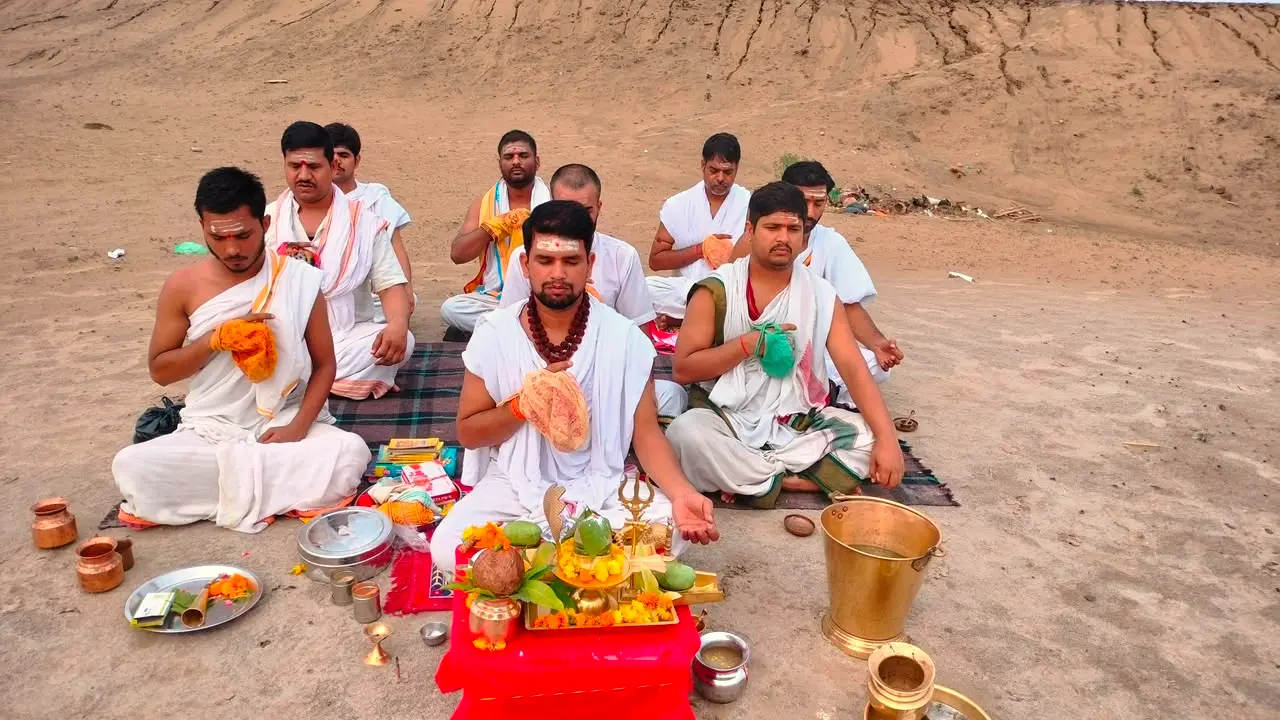
An Ashram is traditionally understood as a place dedicated to spiritual study, disciplined practice, selfless service, and the pursuit of higher knowledge. It is a living environment where ancient teachings are preserved not only through study but through daily practice and direct guidance.
Lakshmi Narayan Ashram follows the principles of Sanatana Dharma, the eternal spiritual tradition described in the Vedas. Rather than representing a single philosophy, Sanatana Dharma encompasses a complete way of life that recognises the unity of all existence and encourages every individual to discover their true nature through knowledge, devotion, righteous action, and meditation.
The activities of the Ashram include the performance of authentic Vedic Yagyas, Jyotish consultations, scriptural study, spiritual education, mantra recitation, and guidance for personal and family life. Every ceremony is performed according to traditional Vedic procedures and with deep respect for the sacred scriptures from which these practices originate.

Our Mission
The Ashram is dedicated to preserving and sharing the timeless wisdom of Sanatana Dharma, the eternal Vedic tradition. Rooted in the teachings of the Vedas and sustained through the Guru–Shishya Parampara – the uninterrupted lineage through which sacred knowledge is transmitted from teacher to disciple – our work seeks to uphold the authenticity of ancient spiritual practices while making them accessible to sincere seekers around the world.
Our doors are open to all who approach with sincerity, regardless of nationality, culture, or religious background. The wisdom of the Vedas belongs to humanity, and its purpose is to inspire inner transformation, compassion, wisdom, and a life lived in harmony with the Divine.

Our Tradition
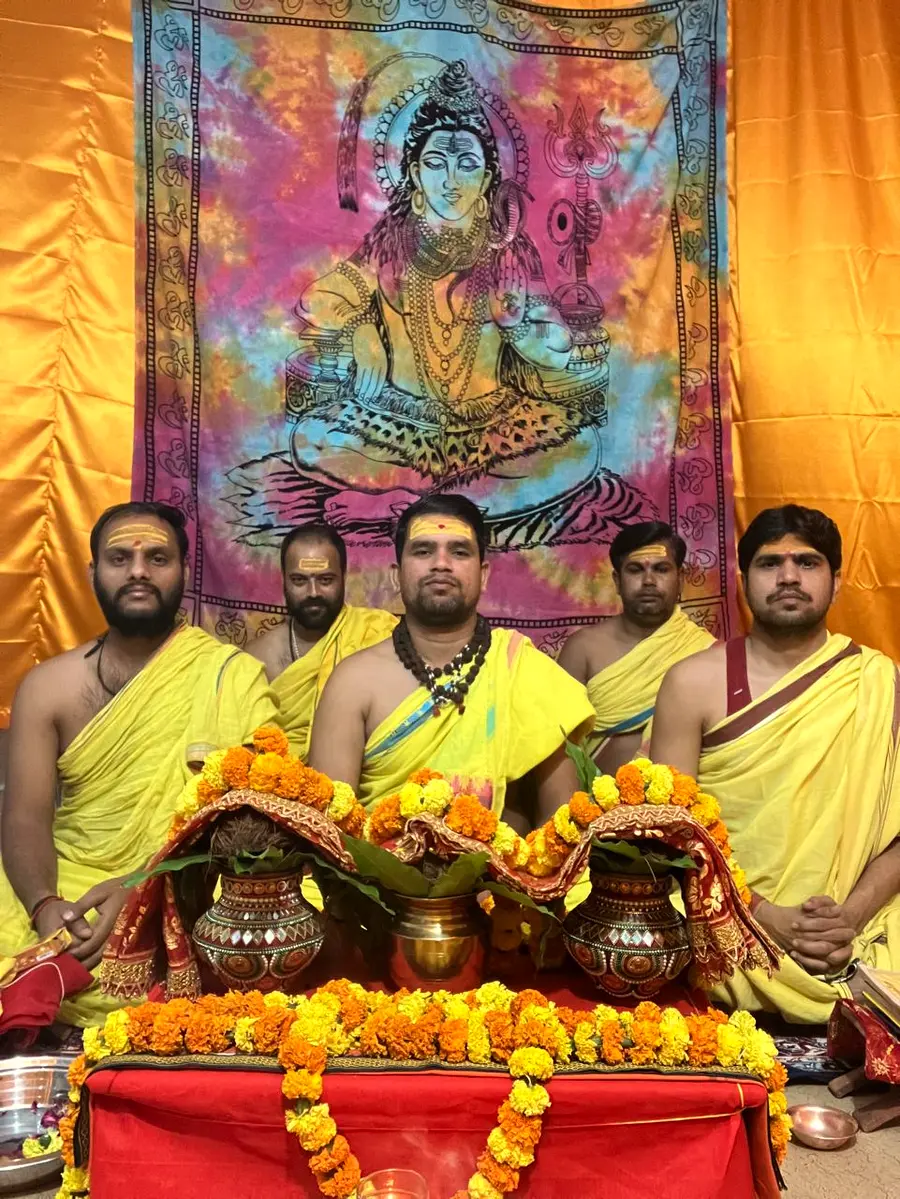
The Vedic tradition teaches that life is governed by universal laws connecting the individual, nature, and the Divine. When these principles are understood and honoured, harmony naturally arises within oneself, within the family, and within society. Through Vedic Yagyas, Jyotish consultations, mantra, prayer, and spiritual education, Lakshmi Narayan Ashram supports individuals in understanding their karmic journey and living in greater alignment with Dharma.
The Vedas are the oldest sacred scriptures of Sanatana Dharma and among humanity’s oldest surviving spiritual literature. The word Veda means “knowledge.” Rather than being regarded as books written by a single author, the Vedas are understood as revealed wisdom perceived by ancient Rishis during states of profound spiritual realization. They contain hymns, philosophy, ritual science, ethics, cosmology, medicine, music, meditation, and guidance for living in harmony with universal law. The four Vedas – Rig Veda, Yajur Veda, Sama Veda, and Atharva Veda – form the foundation of the entire Vedic tradition.
Guru–Shishya Parampara
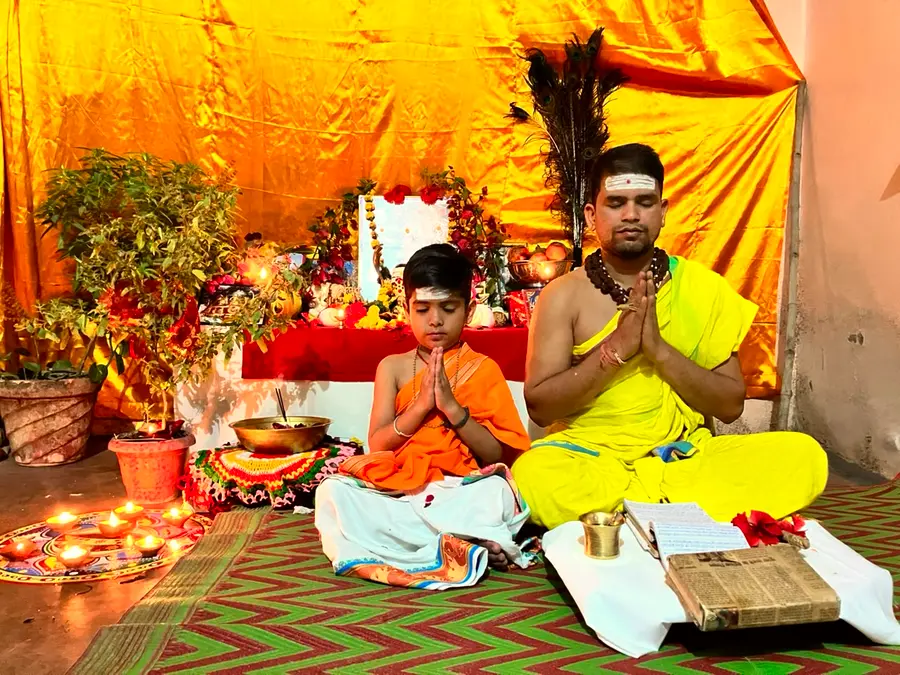
One of the defining characteristics of the Vedic tradition is the Guru–Shishya Parampara – the sacred relationship between teacher and disciple through which knowledge has been preserved for thousands of years.
In Sanskrit, Guru means the spiritual teacher who dispels the darkness of ignorance through wisdom, while Shishya refers to the sincere student who approaches with humility, discipline, and the desire to learn.
Unlike knowledge acquired solely through books, Vedic wisdom has always been transmitted as a living tradition – sacred rituals, mantras, Jyotish, temple worship, and meditation are learned through direct guidance under qualified teachers.
Prayagraj, Uttar Pradesh, India
Prayagraj has occupied a unique place in the spiritual history of India since Vedic times. It is revered as the meeting place of the sacred rivers Ganga, Yamuna, and the invisible Saraswati, collectively known as the Triveni Sangam.
The visible rivers Ganga and Yamuna have long been honoured as symbols of purification, devotion, and divine grace. Saraswati, believed to flow beneath the earth, represents spiritual wisdom, knowledge, and the subtle current of higher consciousness.
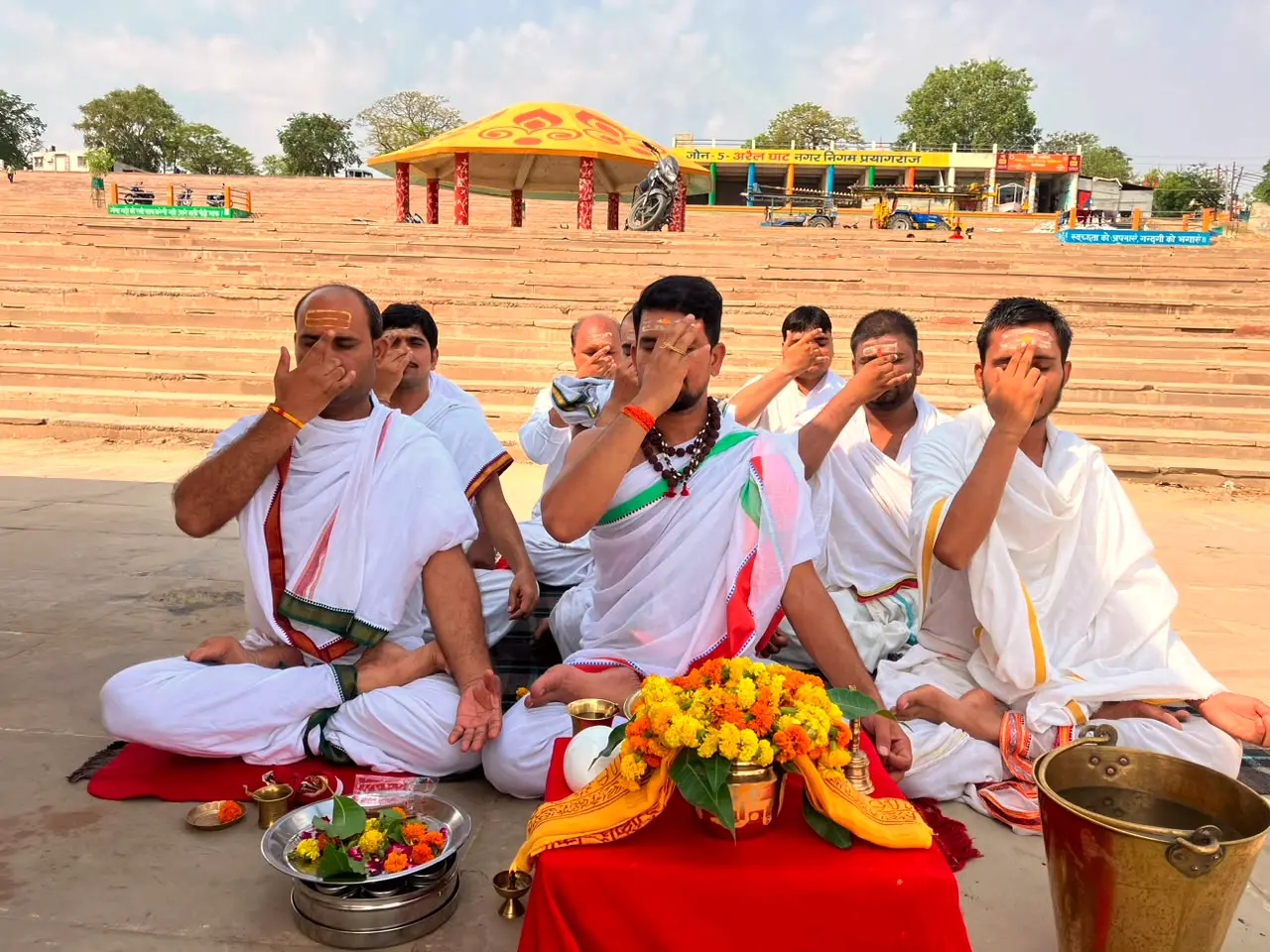
For countless generations, sages, saints, ascetics, and pilgrims have travelled to Prayagraj to meditate, perform Yagyas, study the Vedas, and seek spiritual liberation. The city is also the home of the Kumbh Mela, the world’s largest spiritual gathering, where millions of pilgrims assemble in accordance with ancient Vedic tradition.
The sacred atmosphere of Prayagraj continues to inspire prayer, contemplation, and spiritual practice. Performing Yagyas in this holy land carries profound significance within the Vedic tradition and connects each ceremony with a place sanctified by thousands of years of uninterrupted worship and devotion.